The Work Experiment
The Work Experiment

Issue 01 · The Notification Paradox

Are we reminding people to work, or distracting them from it?

We have more tools, more dashboards and more reminders than ever. So why are we still chasing people for updates?

In the first issue of The Work Experiment, we look at what the research actually says about notifications, why work gets stuck, and whether AI and automation can solve the problem or simply make it worse.

A quarterly magazine from mutherboard for people who want to rethink how work gets done.

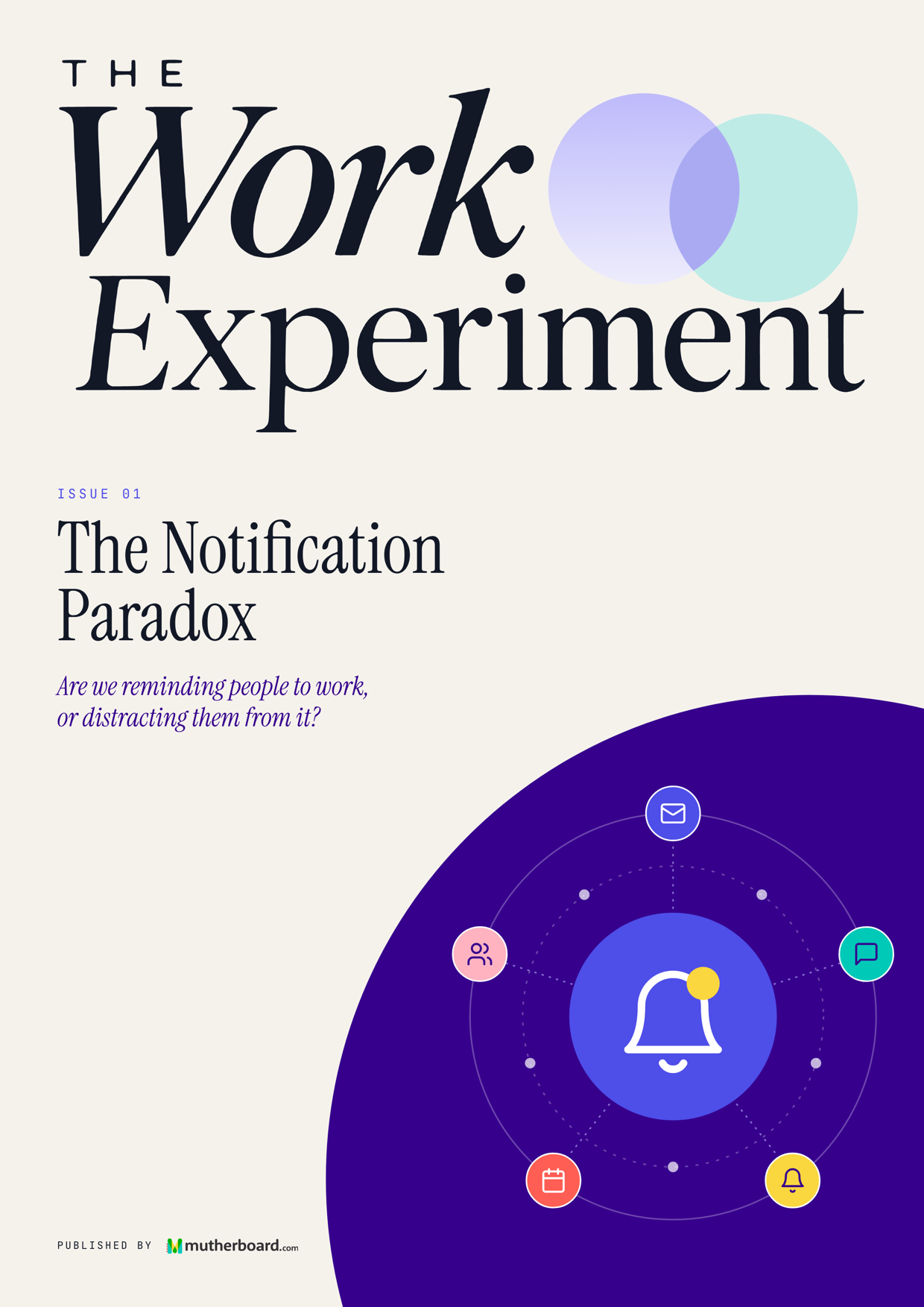
Cover of The Work Experiment, Issue 01: The Notification Paradox

Three findings from Issue 01

What the research says, and why it's worth a second look.

01

Getting someone's attention isn't the same as getting something done.

1.4 percentage points

Reminders do work, just less than we tend to assume. Across 126 large trials run by two US government nudge units, letters, texts and emails improved results by an average of 1.4 percentage points, about a sixth of what published academic studies suggest.

SourceDellaVigna & Linos, Econometrica (2022)

02

Sometimes making the task easier matters more than sending another reminder.

Simpler notice
23%
Complex notice
14%

Among US taxpayers who had already ignored a first notice, 23% responded to a simplified second notice, compared with 14% who received the more complicated version. Same request, less effort.

SourceBhargava & Manoli, American Economic Review (2015)

03

AI can make people feel more productive, even when they're taking longer.

What they believed

20% faster

What was measured

19% slower

In a randomised trial, 16 experienced open-source developers completed 246 real tasks with and without early-2025 AI tools. A 2026 follow-up with newer tools was inconclusive, so this is a warning about measuring impressions, not a verdict on AI.

SourceMETR randomised trial (2025)
Three separate studies, with different people, tasks and measures. None of them describes every workplace.

A little look inside.

Research, real questions and practical ideas, designed to be read rather than skimmed.

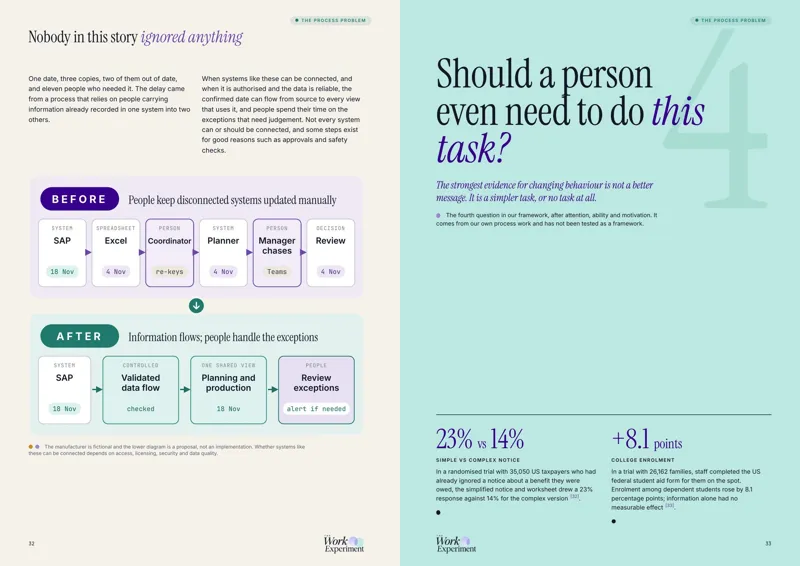
Pages 32 and 33: a before and after process diagram and the transformation question
pp. 32–33
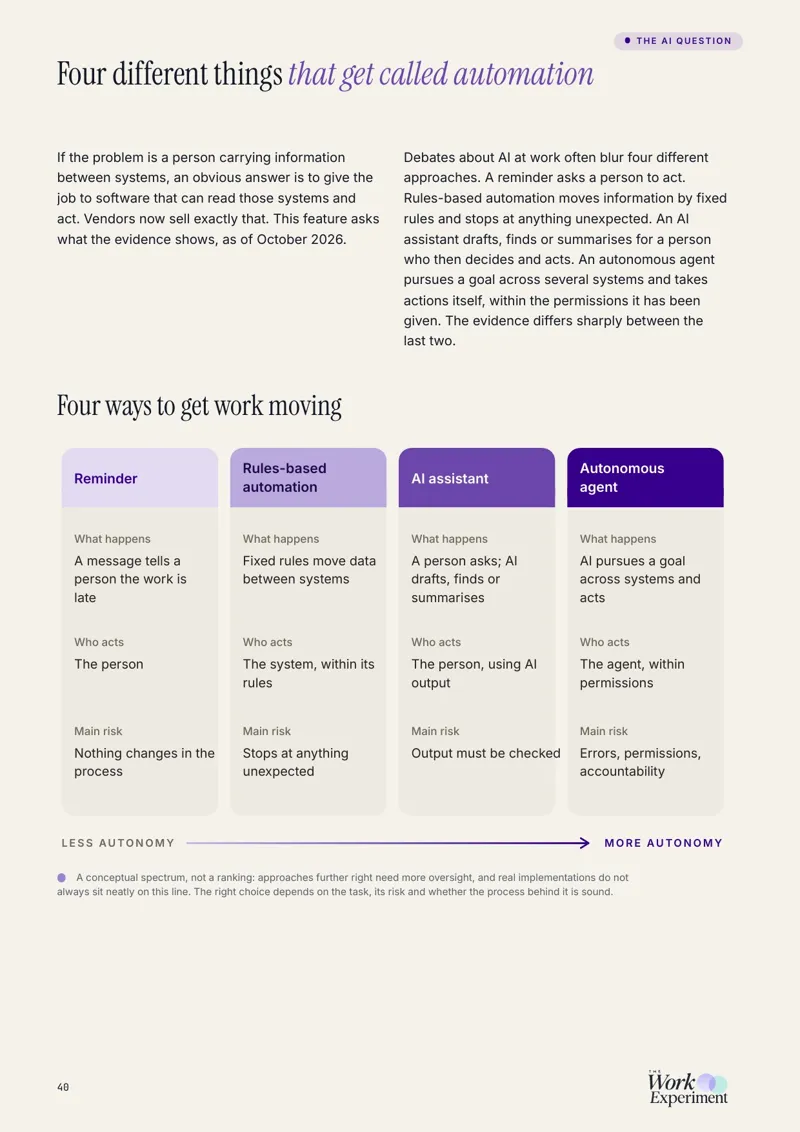
Page 40: four ways to get work moving
p. 40
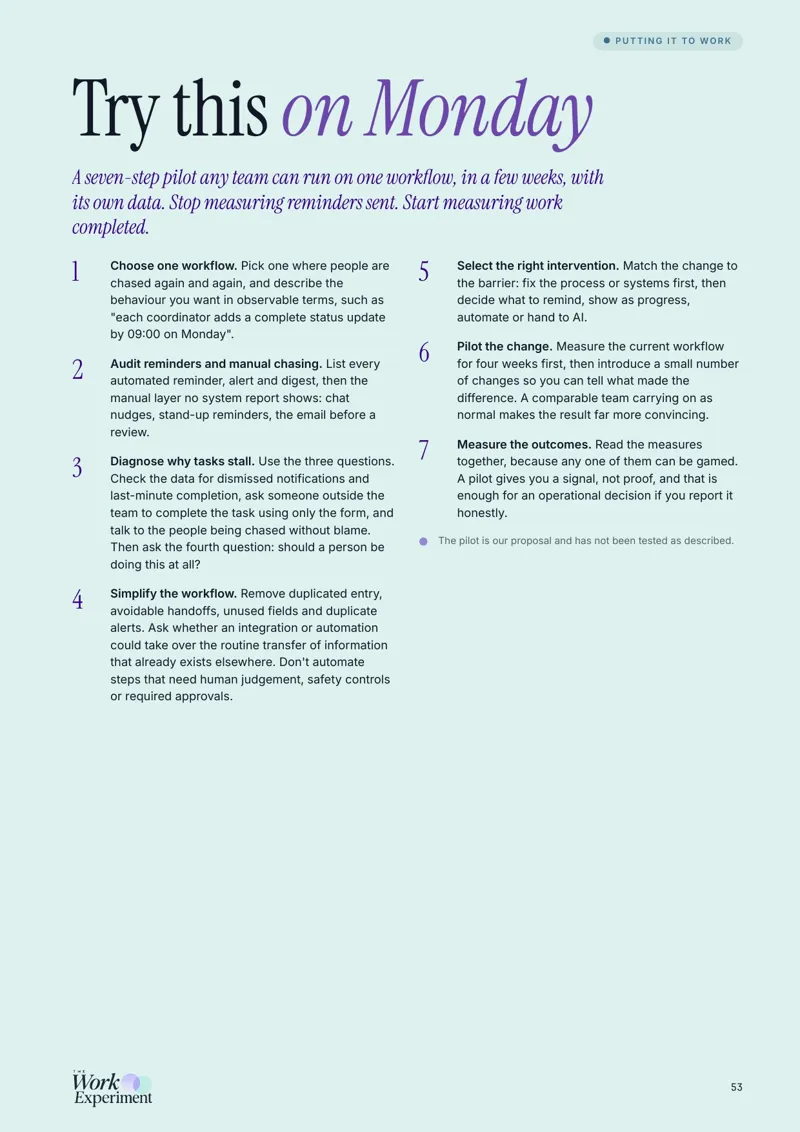
Page 53: the Try this on Monday pilot
p. 53
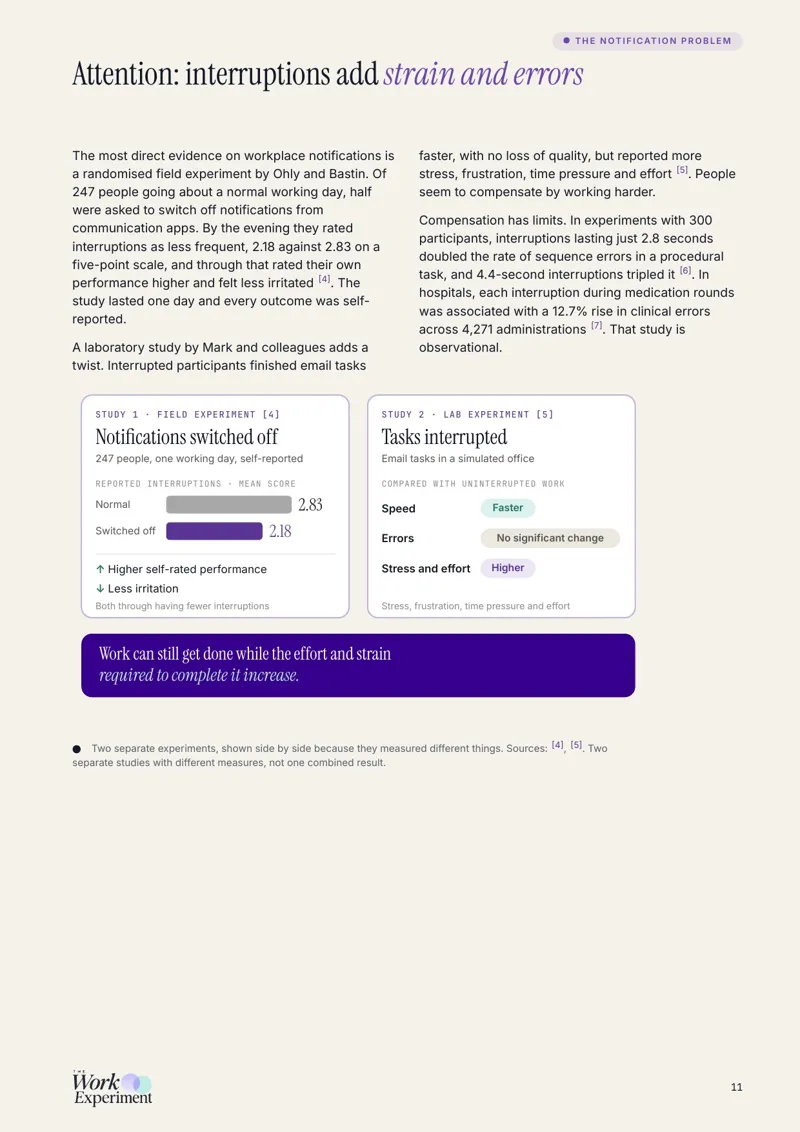
Page 11: research visual on interruptions
p. 11

Inside Issue 01

01

The notification problem

Four reminders. One missing update.

Why do tasks still get missed when the notifications are working perfectly? We follow one fictional working week and examine what the research says about attention, motivation and getting things done.

02

The process problem

What if the task shouldn't exist in the first place?

One supplier date. Three systems. Eleven people affected. We explore what happens when businesses rely on people to keep disconnected systems updated, and what could change.

03

The AI question

Are we automating work, or automating the problem?

From simple reminders to autonomous AI agents, we look at what each approach can actually do, where the risks sit and why more technology isn't always the answer.

04

Putting it to work

What would you change on Monday?

A practical seven-step pilot to help you identify unnecessary work, redesign a process and measure whether the changes actually make a difference.

Why a magazine?

Less noise. More evidence.

There's no shortage of advice about how to make people more productive. New tools, new methods, new AI features. Everyone has an answer.

We wanted to ask better questions.

The Work Experiment looks at the research behind how work actually gets done, challenges some popular assumptions and explores what businesses can learn from it.

We'll tell you when the evidence is strong, when it isn't, and when something is simply an idea worth testing.

Published quarterly by mutherboard.

The first issue

Good questions. Interesting research. Through your letterbox.

The Work Experiment is a printed magazine. Tell us where to send it and we'll post you a copy of Issue 01 when it's published, plus let you know when future editions are on their way.

Where should we send it?

We only use your address to post you The Work Experiment. Printed copies of Issue 01 are limited; if we run out, we'll email you instead.

Read our privacy notice